
An organic compound having molecular formula \(\mathrm{C_9H_{10}O_2}\) exhibits the following spectral characteristics: \(\mathrm{^1H}\) NMR: \(\delta\) 9.72 (t, 1H), 7.1 (d, 2H), 6.7 (d, 2H), 3.8…
Question and options
An organic compound having molecular formula exhibits the following spectral characteristics: NMR: 9.72 (t, 1H), 7.1 (d, 2H), 6.7 (d, 2H), 3.8 (s, 3H), 3.6 (d, 2H). IR: ~. The most probable structure of the compound is
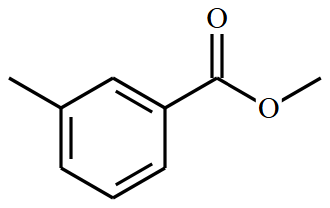
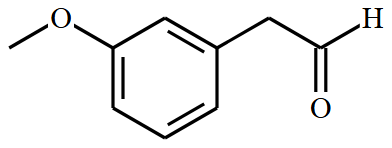
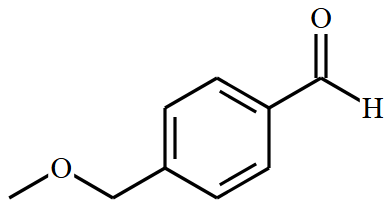
Answer and explanation
Correct answer: C - 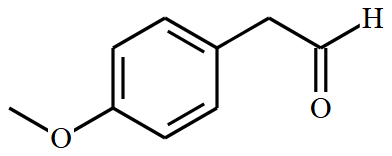
with IR 1720 and 9.72 (t, 1H) indicates an aldehyde CHO next to a (3.6, d, 2H). Two 2H doublets at 7.1 and 6.7 show para-disubstitution, and 3.8 (s, 3H) is : 2-(4-methoxyphenyl)acetaldehyde (para isomer). The meta isomer would not give two clean doublets, 4-(methoxymethyl)benzaldehyde's CHO would be a singlet with no doublet, and methyl 3-methylbenzoate is an ester with no aldehyde proton.
Practice for these exams
-
CUSAT CAT M.Sc. Forensic Science
-
Bihar Judicial Services
Subject revision
-
Uttarakhand Judicial Services
Subject revision